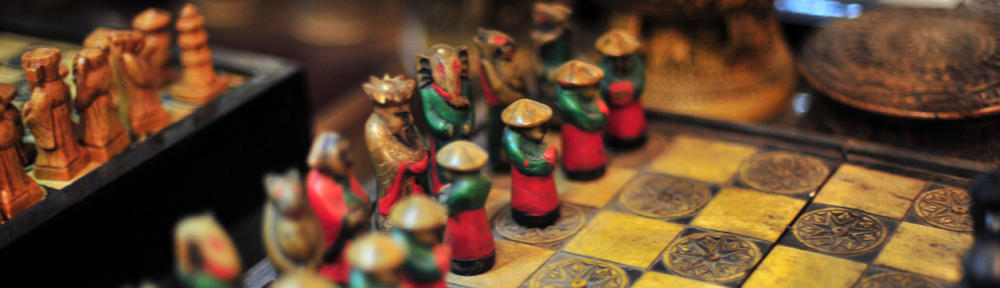
Period-accurate racism against Europeans and Asian-Americans.
Last century, Boss Tweed had arranged a cycle of illegal criminal enterprises, which he’d carefully supported with rigged courts, corrupt laws, and bought votes. He’d always ruled with popular support, for the greatest despot was loved by those he oppressed. He’d occasionally raised his boot and relieved the pressure, and they’d worshipped him for having the wisdom to relent once a year. Even now, that reputation defined Tweed’s leadership.
The Baron recalled that the Boss had celebrated the end of the war in ‘45 by declaring a year without tithes. For twelve months, New York’s vassals had kept the full fruits of their labors or sold their unused prestige for cash. Tweed had been widely praised for so generously doing what the cult should have done all along, and when the senseless tithing had resumed, many tithe dodgers had paid up to reward the triumvirate for its generosity. It was the rare dissenting voice which argued that Tammany Hall could’ve easily paid cash for every tithed day.
The Baron was one of those dissenting voices, but he was also the Atheist. Few were willing to listen to him, and adding his support could hurt a good cause, even encouraging the triumvirate to stomp it out. There were few men the Baron disliked more than Boss Tweed. With Gagliano there was mutual respect, and General Osman was predictably bellicose but ultimately practical. It was Tweed who believed in the New York theology and crafted its foul teleology.
“Insincere respect,” Tweed muttered, “coming from a thief in my country.”
Schuler picked some food off the buffet carts and munched on dripping pork and dark, overripe strawberries.
The Zombie didn’t even pay attention to the men in the room. The Cat occupied his left hand. After a quick look through the cabinets by the carts, he picked up a reddish-brown flask of laudanum with his right hand. Using his teeth, he pulled the cork and sniffed deeply.
“Keep your devil under control,” General Osman said.
“It’s just a bitter drink,” the Zombie said with exaggerated aplomb. He chewed up the cork and washed it down with a fatal dose of the opium tincture. “Very bitter.” He smiled with caramel dark teeth. “Tastes like cinnamon, sherry, and autumn rot.”
Gagliano frowned. “Is that truthfully the Cat o’ Nine Lives in your hand, Golem?”
“Don’t dignify the monster,” Tweed said. “I’d recognize the artifact anywhere, but I can hardly imagine the story that brought it here, and I can barely grasp the Baron’s betrayal of my trust. I can only conclude that Meister Schuler has saved you from embarrassment, General.”
Tweed was trying to egg Osman into overreacting, the Baron could tell, but he couldn’t quite figure out the man’s angle yet. Osman was gladly falling for his manipulation.
“Meister Schuler was deployed on my orders,” Osman said grimly, “and he saved you from the godless frog you fools invited into our fine city.”
“The frog invited himself,” Tweed said.
“I’m German,” the Baron corrected.
“Yes, we all know what atrocities your race is capable of, kraut.” General Osman adopted a different flavor of hate as easily as a skilled musician changed keys.
Schuler finished his bites and licked his fingers, then sidled past the Zombie to a tray full of hard, flaky cheese cubes and a tiny bowl of incredibly viscous vinegar. Each cube was pierced with a dark wooden toothpick. He picked one up with a drunk slowness, then whispered to the cheese and popped it in his mouth. He dropped the toothpick in the vinegar bowl, out of focus and unaware of the unsanitary result. It was disarming behavior, but the Baron knew that the Diviner was arguably more aware of the environment in this state and similarly harder to ambush. This was a tense interview, but it was an even more dangerous standoff.
“I’ve lived on American soil longer than you’ve been alive,” the Baron said, choosing to focus on his aspect of this battle. “I’m as American as anyone.”
“Time ill spent.” General Osman leaned back in his chair. “Look at these chambers. This is a place of business, a war room, and a court room. Do you see anyone? Do you see a single person, Baron? You’ve scared them. You’ve made our people fear the dark.”
The Baron shook his head. “Are you blaming me for people abandoning their posts?”
“They won’t abandon anything,” Tweed rumbled, “but they won’t come until Osman secures Lower Manhattan.”
“They’ll come after dawn, when civvies cover the approach,” Osman added.
d’Holbach sniffed. “Then I don’t see how I’m responsible.”
The Zombie was chugging laudanum. Despite taking enough narcotics to kill several grown men, he wouldn’t feel the drugs. It was the terrible flavor that attracted him.
Tweed combed his beard with his fingers. “Arrogance.”
“What about it?”
“It’s your greatest fault, Baron. You’re arrogant.”
“Are you talking about hiding the Cat? There’s nothing arrogant about aiming high.”
“I’m talking about temporal power, Baron. I’m talking about your damned monster. When was the last time that your decisions had consequences for yourself? When was the last time anyone had the power to punish you?”
“I face a lot of risk,” the Baron said, “most of it a result of my choices.”
“But you don’t face moral consequences, Baron.” Tweed scowled deeply. “This is arrogance. You have the privilege of doing as you please. You destroy good and orderly things at will, and you tell everyone, it’s for a good cause. Meanwhile, nobody can stop you.”
“What’s your point? Are you blaming me for the fifth column?”
“We’re looking for an enemy that you angered, and you still think you’re a good person.” Tweed gestured at the Zombie with a hand adorned with multiple plain rings. They were probably minor defensive artifacts. Quite a few had been collected during World War II. “Look at the beast you call friend. You bring him into our sacred chambers, and he mocks us, and what do you do? Where’s the discipline? You aren’t even contesting his vandalism.”
“I’d drink this swill even if he wasn’t around,” the Zombie said.
Schuler was leaving a small pile of toothpicks in the vinegar.
“I haven’t even told you why I have the Cat,” the Baron said, “or what I’m doing with it.”
Tweed slapped his hand on his armrest. “There are no excuses for arrogance! Let me be clear. You’re an evil man. You spread disaster and disorder because you force the world to conform to you. Is a door locked? You ask your iron man to break it down. Does someone stand in your path? You wait in silence while your monster dispatches him. Are there rights, laws, trusts, contracts, or oaths that bind you? You escape them, and nobody has the strength to enforce them. The Zombie allows you to act as if you’re morally invincible, and you mistake that for moral righteousness. You insist that your brute strength is a necessary evil.”
“I’m not the Zombie’s keeper,” the Baron said, “he keeps me.”
Tweed sneered. “That’s an easy lie, isn’t it? You push responsibility onto the weapon. You pretend you can’t or won’t pull the trigger. It’s shameful.”
The Baron grunted. Tweed accused him of arrogance, but the Baron only affected the lives of those who chose to participate in the occult—who chose to antagonize or oppose him. Tweed on the other hand approved of a system where the gods might assign a task to murder a man or sink a valuable ship, and he would believe it was good because the gods wanted it. He tithed vast quantities of prestige and imposed a vassal system on the cultic West. To enforce it, there was always someone out in the world with a smoking gun and a list of names, half of them struck through with red ink. “You’re no saint yourself,” the Baron said.
“I’m not,” Tweed agreed, “but at least I admit my evil. We’re the same, in a sense. The difference is, I create order, and I have the humility to acknowledge what sacrifices I inflict.”
“You’re wrong,” the Baron said flatly. “I watch the Zombie commit crimes on my behalf, yes, but you sign orders for servants to commit atrocities in your name. You want to talk about arrogance? You think you’re helping cults find order because you’ve conquered them. You think you’ve created a damn occult Pax Americana based out of New York City.” He frowned. “What does this have to do with the Cat, anyways? Do you think you’ll shame me into handing it over? Because I can’t even fathom the logic there, Tweed. I can’t.”
Gagliano, who had been listening to the exchange in thoughtful silence, spoke up: “Baron, I think Tweed’s point is simple. You thought you could take the Cat out of New York territory. That’s arrogance. You fought with the natural course of history. That’s arrogance too. The Cat is clearly here because it’s meant to be ours, and you’ve had the gall to keep it a secret from us. That, my dear Baron d’Holbach, is arrogance of the worst kind. As the others say, it is theft. And we are not happy with you.”
“You never owned it,” the Baron said, “and it’s not stolen. The Cat was lost, and I was hired to return it.”
“Lost in our lands,” Osman muttered.
The Baron raised a hand for attention. “Consider what’s at stake. The Bolshevik faction of the Soviet cult loaned the Cat o’ Nine Lives to the Orthodox faction. If they can’t return the Cat when the Bolsheviks demand it, they’ll be forced to pay a security to Stalin’s representative. That’s two nuclear option ikons, the Lazy Woman and one Apple of Perun. With those tools, Stalin would eliminate the Orthodox opposition. In a handful of years, the warmongers would be ascendant. They could come after you.”
“We’re aware of the Soviet conflict, Baron,” Gagliano said. “We have spies of our own.”
“Then you understand how close we are to a massive shift in occult power. Right now, the core of the Slavic arsenal is under Orthodox control. We need it to stay that way.”
“Kraut,” Osman said idly, “you said you’re not a thief, but here’s a riddle. Who had the Cat before you did? Was it a Russian or a New Yorker? I know the name of the Orthodox agent who swallowed the Cat o’ Nine Lives. Janos Nagy, the assassin. Did you take it from him?”
“I didn’t take it from Nagy,” the Baron said carefully, admitting no more.
“Of course,” Osman said, “but you know he was here in New York.”
“Do I?” the Baron asked flatly.
“He was still carrying the Cat only a month ago in East Berlin. I haven’t heard any reports about his death, but we lost several men on the SS John G. Paines. I put Schuler on the warpath, thinking he’d sniff out a hit from a rival cult, but it’s so much worse, isn’t it? Nagy came to snipe a New York task, and he died. Only one guess to name his killer, too.”
“Do you know who was on that ship?” the Baron asked.
“I know which men were hired on the record,” General Osman said. “Jacono was one of my best, and with a lot of luck, he might’ve done the deed and run off with the Cat. I tried to call on him after his death, only to learn from Maurice that you called upon him first.”
“I did,” the Baron responded.
“So, I conclude New York cultists had the artifact after Nagy’s death. By right of conquest, it was ours, but look now.” He pointed to the Zombie. “It’s in your beast’s left hand. No man would have the right to give it to you, so how did it get there? Thievery? Murder?”
“It was given to me,” the Baron answered carefully.
Osman shifted in his chair, leaning forward. “Deception then. I think about the bodies you left yesterday, and I see the Boss’s logic. You stole from us, Baron, but you don’t even believe you’re a thief. Like any other kraut, you’re arrogant.”
The Baron made the executive decision to push a little harder, to reveal a little more of the story in order to push back on this narrative. “Jacono gave it to the dock boss running the job, and that man failed to report it to you, let alone hand it over. The Russians killed him for his trouble in Red Hook, but not before he’d told me where he’d hidden the artifact. It was given to me for safe-keeping. If anyone is a thief, it’s the dock boss, though he didn’t know what he’d taken or why he was killed for it. He just wanted a powerful man to help him, so I did.”
“You give speeches,” Tweed said, “but there’s no substance there. Did this dead dock boss go to the gods? Could he vouch for you now?”
“I’m afraid not,” the Baron said.
“So, you expect us to trust you,” General Osman said.
“Yes. If I’d crossed you, I’d say as much and still think I was doing the right thing.”
“Of course you would,” Tweed said with a dark smile. “Of course.”
The Baron was frustrated by these petty arguments about his culpability. “Does it matter what happened? This is necessary. I spent the last day fighting a fifth column over the Cat. If they capture it, Stalin will demand the security payment, then recover the Cat later. He’ll win everything, and the balance of power will shift until it tips over. I’m helping everyone!”
“More arrogance,” Tweed said. “All you do is praise and excuse yourself for bringing disorder and violence to my city. When forced to recognize your crimes, you act as if it was necessary to bear the risk and responsibility on your shoulders alone. If what you said were true, how could you justify it? Why wouldn’t you ask the leaders and lawmakers for help? Why wouldn’t you trust us to be as reasonable as yourself, unless you believed that you were more reasonable than the entire world? Do you think you’re better than us?”
“I don’t think I am—”
“Yet you pretend to be an ubermensch,” said Tweed.
“A what?” The conversation was taking a sharp left turn towards one of Tweed’s philosophical obsessions. “You think I want to embody Nietzsche’s ideal?”
“Have you read him? Oh sure, you’ve put eyes to pages, but have you really read him?”
“I’m no pretender to some insane nihilistic superman.”
“But you are!” Tweed’s nostrils flared. “You seek risk like it’s meritorious, eschew the promise of the afterlife, even defy the obvious truths of souls, free will, and the divine! You cling to this life with a foul love, becoming the antithesis of all that is holy in order to squeeze another day of immortality. You abuse a good man’s wish!”
There was the connection that explained the change in subject. Nearly seventy-five years ago, Tweed had admitted to envying the Baron. That was before he’d faked his death and sacrificed his freedom for the safety of a self-made prison. The passing decades had only increased the man’s bitterness. “I didn’t ask for this, Tweed. Eternity was thrust on me.”
“Aye, you complain, yet you keep it. You’ve been given the opportunity every man in this room desires, but you’ve pissed away the gift and sought to create new meaning—to reject the divine purpose of the gods.” Tweed wiped flecks of spittle from the edges of his mouth. “I’ve heard your damned fantasies before, and it’s little more than childish science-fiction. You pretend to be everything Nietzsche calls the ubermensch, but you refuse to bear the name because you know it’s foolishness. So I curse you with it, would-be overman. You would-be ubermensch!”
“I can’t tell if you’re calling me a Nazi or an anarchist,” the Baron said.
“You suggested it,” Tweed said, “not I.”
The Baron snorted derisively. “This is why I can’t trust you. You think I’m insane. You won’t listen to anything I say.”
“Aren’t you insane?” Gagliano asked. “Consider the contradictions. You’re an atheist, yet you wish for help from gods. You deny the existence of choice, but you insist morality is real. You deny the existence of souls and speak with the dead. What else could you be?”
The Baron huffed with frustration. “My beliefs are consistent. Rational. They’re not gods—”
“Don’t!” Tweed interrupted sharply. “Don’t blaspheme in my temple, Baron!”
The Baron waved the offense aside. “Forget it. I didn’t come here to debate theology with true believers.” He gestured to his invincible friend, whose head was thrown back.
The Zombie was currently tapping the bottom of the laudanum bottle to drain the very last drop into his mouth. He lowered it, waving it towards the crowd. “May I eat this?”
“The entire thing would shatter,” the Baron said. “Set it down. Tell these men, how hard was it to defend the Cat?”
The Zombie chuckled, setting the empty bottle on a table. “Difficult. Baron d’Holbach nearly died three times by my count.”
“And if New York had been involved yesterday?”
“It would’ve been an occult war. Even if New York had aimed to help us, hundreds would’ve died in the fighting, all while I protected the Baron.”
“And why is that?”
“Because New York lacks perspective and preparation.” The Zombie wasn’t grinning. His verdict was delivered with solemnity. “They’re a regional interest and this is an international conflict.”
“Regional?” Osman shouted.
The Baron jumped on that point: “The last thing we need are tin soldiers rattling their sabers and alerting Langley, or the Soviets forfeiting their fifth column militia and deploying state-trained special forces.”
Osman stood from this throne. “We are the center of civilization!”
“Sit down,” Gagliano muttered.
The Baron rolled onwards, knowing that this was his last opportunity to win any reprieve from Tammany Hall. “The Zombie saw occult Spetsnaz operatives at the UN Secretariat. If you’d moved in force, you would’ve started a street battle against world-class soldiers.”
“We are the largest occult power on Earth!” Osman said fiercely, half to the Baron, half to Gagliano. “North America, Western Europe, South Africa, even the gods damned Pacific—I refuse to be called regional when our region spans oceans!”
High Oracle Gagliano stared down the General. Osman composed himself for a few seconds before returning to his chair in silence. He seemed to think his point was made.
Gagliano spoke to the Baron: “You mistake us for petty warlords.”
“He mistakes his demon murderer for an expert,” Osman said.
“The Zombie speaks the truth as he sees it,” the Baron said. “I trust him. I don’t trust any of you to make the Cat safe—to keep it from Langley or the Soviets. The stakes are too high.”
Schuler ran out of dry cheese to eat, dropped the last toothpick in the bowl, and leaned back against the wall. He had a glassy stare, head cocked and listening to a busy planet. The Zombie ambled over and picked up the bowl of vinegar-soaked toothpicks. Right in front of Schuler, he opened his mouth wide and ate the pile.
“Disgusting,” Tweed said. “Those were in his mouth.”
“This is a circus anyways,” the Baron said, “You can’t take the Cat from him. No matter what happens to me, you can’t pry open the grasp of an invincible man.”
“I was hoping you would give it up,” Gagliano said, “since you can’t leave.”
The Baron didn’t debate the point, because it was true for now. He was here under threat of death, but the Zombie’s Pact was similarly absolute, and neither Schuler nor the Zombie could be stopped. If either party struck a blow, all would die. It was mutually assured destruction. Instead, he made his final appeal. “I voluntarily came, because I hoped you’d see the futility of taking the Cat. I beg you—at least think about your interests. You know about the Soviet schism. You must know the Bolsheviks will risk everything to win the Cold War. Even Armageddon.”
“I don’t care,” Tweed replied curtly.
“You should.”
The old Boss grunted dismissively. “We’re not here to contest their Communist eschatology. Rather, I object to your insinuations that we cannot protect ourselves. We are more than capable of holding onto the Cat. As I see it, now that it’s here, it’s our job to safeguard it. It’s our purpose.”
“Your purpose?” The Baron was awestruck. “There’s no purpose, there’s only people, and this is the future of our civilization! We should want a stalemate! Gridlock! We need to bargain for time. Tomorrow will come only if everyone agrees that today isn’t our last.”
Tweed sighed irritably. “Baron, why do you insist on fighting with the course of history?”
“Fighting the course? History isn’t a path to walk. It’s a process, and we’re part of it.”
“We’ve had this discussion before,” Tweed said. “Hegel wrote it all down.”
Oh no. Not this again.
Georg Wilhelm Friedrich Hegel was a German philosopher born shortly after the Baron had first faked his death. He’d written labyrinthine tracts of linguistic ambiguity, taking advantage of particularly German idiosyncrasies to craft double meanings and assert contradictions and negations without any regard for classical logic or reason. His most infamous confusion had been the abuse of the word “geist,” by which he’d deliberately meant either mind or spirit, even while he’d denied that mind and spirit were the same thing.
“Spare me, Tweed,” the Baron said. “You misunderstood Hegel.”
Boss Tweed tutted. “You accuse me of your own faults, Baron.”
“I’ve heard your arguments before, and they’re wrong. At no point in Hegel is there a true dialectical process. There’s nothing like a divine plan!”
“It doesn’t matter. If it isn’t in his books, then it’s in the world. History is a series of Falls, both secular and occult, but they aren’t descents into anarchy. They’re steps up a ladder, higher and higher, approaching a historical end—a final unity!”
“This is a complete misinterpretation,” the Baron said.
“It’s a proper interpretation in light of what we know about reality.” Tweed smiled broadly. He honestly believed he’d found a deeper insight inside verbal spaghetti. Like a man finding castles in the clouds, he’d spied a self-serving worldview hidden between the lines of philosophical white noise. “Consider the Hegelian dialectic again.”
“You’re deluded,” the Baron said.
“It goes ‘thesis, antithesis, and synthesis,’ Baron. The old thesis was London’s world. Prestige was used to wish for knowledge, and occult colonialism decided the fate of nations. The antithesis was the Russian response, the anarchic revolt. They personified our urge to destroy civilization, to revert to a state of nature where we would all be masters, none slaves. Their conflict created the Apostate, a focal point of sin, and she seized the power of the thesis and the will of the antithesis. She forced the birth of the new synthesis through the Fall of Truth. London collapsed, and we rose to take their place on the throne. We adopted the new thesis—we use prestige primarily to seek the afterlife.”
“You’re confusing what happened with what ought to happen. New empires rise to replace old ones, but that doesn’t mean that empires must exist.” The Baron’s argument had no visible effect on Tweed, but the is-ought fallacy was never truly intuitive.
“Everything that happens has a reason, Baron. When I saw the Cat in your monster’s hand, I knew deep in my heart, it was meant for us.” Tweed patted his round, soft chest. “You’ve come to give us this tool, because we must have it for the coming conflict. If we are the thesis, then someday an antithesis must rise. Why not the Soviets again? Who are we to second guess the course of history? They seem more likely than most, and they’ll serve the course of history, even if that means finding a new synthesis in the detonation of a bomb.”
“You think nuclear war is Hegelian?” The Baron was flabbergasted. This was a fatalistic twist on the old New York theology he’d heard in the interwar period.
“I don’t know what to think,” Tweed said gruffly, “except that it isn’t our choice to make. History will find a way to the proper end. In the secular world, we have the thesis of the West and the antithesis of the East. How will the Cold War end? What synthesis will they bear?”
“Peace. I hope.”
Tweed laughed at peace, at the Baron’s reason, and at everything that wasn’t his conception of history. “The rise of the secular superpowers was inevitable. The entire world can finally be drawn into a single conflict, and we can begin our approach to the final synthesis, the ultimate unity of the world-spirit. Baron, you have brought us a weapon because we need it, because it will preserve life in death, and we will be reforged in the fire. When the fat is burned away, what remains of New York will be the synthesis of the final era of history.”
“Do you hear yourself? A final synthesis, a final era—what does that even mean?”
“These aren’t empty slogans,” Tweed said, fervent in his belief. “The answer to your question is also in Hegel. The purpose of history is to eventually resolve the most fundamental conflict of the Hegelian dialectic. The thesis is life. The antithesis is death. We taste the synthesis by wishing to go to the gods, but a true synthesis will resolve the dynamic tension by eliminating the differences between life and afterlife. Baron, if we allow history to finish its course, we won’t need to fleece the gods for immortality. We won’t buy it with the blood and sweat of hard-earned prestige. We will create the afterlife on Earth, or we will obviate the need for the afterlife altogether.”
“How?” the Baron asked. “How would any of this make sense?”
“An idiot’s question. If you’d asked the men of London why their cult would fall and what their successors would do without wishes for knowledge, what do you think they’d say? Madness. Improbable. Even impossible. They couldn’t conceive of the synthesis.”
“Nor can you,” the Baron said.
“Nor can I,” Tweed agreed.
The Baron waved all of this aside. “I’m not giving you the Cat o’ Nine Lives.”
“Not today,” Schuler said quietly.
The Baron turned to the Diviner. Schuler was focusing in, straightening and standing. The Baron asked him, “Then you’ll let us go?”
“We have to keep you here.” Schuler closed his eyes. “We must, yes.”
“There’s no good reason to keep us here.” The Baron looked to the triumvirate. “Tweed, I know you’re a cunning man. I know you’re a practical man, a winner. I’m asking for your permission to let us all win. Let me take the Cat and deliver it to the Orthodox faction.”
General Osman spoke up. “There’s a clear angle, kraut.”
“What’s that?” the Baron asked. “Do you think you can reason the Cat out of the Zombie’s grip? I think you’ll find it’s unmovable.”
Osman leaned forward. “Let me make my feelings on this matter utterly clear. I would see this world destroyed before I’m beaten by you, and I don’t fear death. If you attempt to leave without my permission, I will order Schuler to kill you, and I will die victorious because I’ll have seen your corpse laid out on the floors of a ruined temple.” He sat back again. “I’m not rushing to meet the gods though, and I doubt you are either. There’s only one way you’ll leave alive, and that’s if you hand the Cat over to us. This is fact, non-negotiable.”
“Tweed, you approve of this?” the Baron asked.
Tweed pursed his lips. “Why hasn’t the security been paid to the Bolsheviks? The Cat is lost, and they know it. Why isn’t this already a lost cause for you?”
“You won’t answer my question?”
Tweed steepled his fingers. “The way I figure it, the Soviets have set a deadline. How much longer did they give you? A day? Two? A week? A month? It doesn’t matter. Once it’s clear that you’re not leaving Tammany Hall, they’ll have to pay out the security.”
The Zombie scowled at the room. “I would kill your entire cult if the Baron died.”
“Baron d’Holbach.” Tweed leaned back in his crimson throne. “Answer me truthfully, and I’ll make your stay comfortable. Once the security was paid to Stalin, giving the Cat back to the Orthodox faction wouldn’t make a lick of difference, would it?”
“It wouldn’t,” the Baron agreed reluctantly.
“Then you wouldn’t have any reason to hold onto the Cat afterwards?”
“Beyond spite or personal use, no.”
Tweed smiled. “We’ll be holding you for a few days. Once we have evidence that the security is paid out, we’ll reconvene here and discuss whether or not you want to keep the Cat. Time is on my side, Baron. History itself favors the New York cult. As in all things related to the course of history, patience is the greatest virtue. If we wait, we win by default.”
“You’ll irreversibly damage the balance of power in the Soviet cult.”
“That’ll happen regardless. We’ll just benefit as the gods intended, and we’ll take the Cat o’ Nine Lives for our own. You’ll either succumb and surrender, or you’ll wait here until the synthesis occurs.”
“I’m sorry, Baron,” Gagliano said, “but they’re right. We have nothing to gain by letting you go, and someday soon, the Cat will be less important to you than your freedom.”
“You’ve lost, kraut,” Osman finished. “New York wins. We always win.”
Author’s Note:
Boss Tweed has strange beliefs.
As always, thank you to the beta readers for helping with this chapter!
Join the Discord to discuss the story and hang out with other readers!
Join the Patreon to support the story and access 4 weeks of early chapters!